Hey there! If you’ve ever wondered how those things we sell every day—detection systems—actually work, you’re not alone. Like, I get so many Slack messages (wait, no, our sales team does, but I read through them) from people asking, “How do these things even catch what they’re supposed to? Do they just magic it up?” Let’s break it down, no boring jargon, I promise. We’re a detection systems supplier, so I’m not here to sell you a pile of garbage that doesn’t work—this is the real stuff we install in warehouses, factories, retail stores, even some schools. Let’s get into it. Detection Systems

First off, let’s talk about the core of any detection system: it’s not one magic gadget, it’s a team. Think of it like a neighborhood watch, but with way better tech. There’s the “eyes and ears” part that senses stuff, the “brain” that processes what it’s sensing, and the “action” part that does something if it finds a problem. Let’s start with the sensors, because that’s the first line. What kind of sensors are we talking about? Way more than just the motion sensors you see at the grocery store door. We’ve got passive infrared (PIR) sensors—those are the ones that pick up heat, right? If a human (or animal, or hot coffee cup) walks past, the sensor notices a change in heat from the background and sends a signal. But wait, PIR’s not perfect—they get triggered by sunlight through a window, or a big fan blowing hot air, so we pair them with other stuff. Then there are microwave sensors, which send out tiny, invisible microwave beams and measure how they bounce back. If something moves, the bounce changes, and that’s a trigger. These are way more reliable for big areas, like a warehouse loading dock where wind might mess with PIR. Oh, and we also have magnetic sensors for doors and windows—if a door gets pried open, the magnet separates, and the sensor beeps. That’s basic, but it works for small spaces.
Wait, let’s not sleep on newer sensors, though. LIDAR is big right now, especially for larger industrial sites. LIDAR sends out laser beams thousands of times a second, makes a 3D map of the whole area. So it’s not just detecting movement—it can tell the difference between a stack of pallets that’s supposed to be there and one that’s moved, or even tell if a person is standing vs. a forklift driving by. That’s next level, and we use those for our big factory clients. And then there’s audio sensors—they pick up specific sounds, like glass breaking, or even the sound of a weapon being discharged, if that’s what you need. For retail theft, some of our systems pair audio and video sensors to catch someone swiping a phone and the sound of the security tag being deactivated.
Okay, so the sensors collect all this data, but what do they do with it? They send it to a control panel, which is the brain of the operation. Back in the day, control panels were big metal boxes in a closet that only a electrician could program. Now? They’re cloud-based, so you can check your system from your phone while you’re on vacation. The control panel runs what we call “detection algorithms”—that’s the code that tells it what’s important and what’s not. Let’s use an example: if you have a PIR sensor in a warehouse, and a rat runs across the floor, the algorithm shouldn’t trigger an alarm. But if a human in a hoodie crosses that same sensor at 2 a.m. when there’s supposed to be no one there, it should. The algorithm learns over time too—we can “train” it to know what’s normal for your space. Like, if your loading door opens every morning at 7 a.m. for deliveries, the algorithm gets used to that and won’t flag it as a break-in. That’s why our systems are customizable—one size definitely doesn’t fit all.
Wait, let’s talk about the difference between “detection” and just “alerting” because that’s a big one. A lot of people think these systems just beep, but modern ones do way more. If the control panel detects a problem, it sends alerts. What kind of alerts? It can send a text to your phone, an email to your security team, even a notification to a monitoring service. And some systems have cameras that automatically snap photos or start recording the second an event is detected. For example, if someone tries to break into your store overnight, the LIDAR sensor picks them up, triggers the camera, sends you an alert, and even locks the back door if you have integrated access control. That’s way more useful than a old school alarm that just goes off and scares the cat (speaking from experience, my neighbor’s old alarm did that).
Let me give you a real example of how this works, from a client we did last month: a mid-sized retail store in a mall. They were having a problem with shoplifting of high-end electronics, and their old system kept missing it because the camera system would only record when someone tripped a motion sensor, which happened all the time from mall foot traffic. We installed our combined PIR/magnetic/LIDAR sensors paired with smart cameras. Here’s how it went down: at closing, the security team arms the system. The next morning, the system detects someone trying to pry open the glass door (magnetic sensor trigger) and also detects movement inside the store near the electronics section (LIDAR, since it can tell it’s not a mall employee restocking). The camera automatically starts recording, snaps a photo, and sends an alert to the store manager’s phone and the 24/7 monitoring service. The monitoring team checks the photo, sees it’s an unknown person, and calls the local cops. By the time the cops get there, the camera has a full video of the person taking a tablet, and the guy is gone. Wait, no—he didn’t get away, actually, because the system also triggered a hidden speaker that blared a message: “Security is on your way, stop now.” He dropped the tablet and left, no arrest needed, and the store got a video of the theft for insurance. That’s the good stuff, right? No false alarms, works when you need it to.
Now, I know what you’re thinking: “What about false alarms? That’s the worst.” Yeah, we get it. Nothing makes people tune out their security system like it going off for a cat walking across the floor or a garbage truck driving by. That’s why we build our systems with multiple layers of detection—called “fusion” for the techy folks. Like, you don’t use just a PIR sensor to trigger an alarm; you need two: a PIR and a magnetic door sensor, or a LIDAR and an audio sensor. So both have to trigger for the alarm to go off. That cuts false alarms down by like 90% from old systems. We also let you adjust sensitivity levels. If you have a big warehouse with high ceilings, you can turn the PIR sensitivity down so it doesn’t pick up a fan blowing, but if you have a small office, you can turn it up to catch someone crouching down.
Another thing people don’t talk about: data storage. All that footage and sensor data, where does it go? Our systems store it on encrypted cloud servers, so if someone breaks in and steals a control panel, they can’t erase the footage. You can access it from anywhere, for up to 30 days (or longer, if you need it). That’s a big deal for insurance claims, or if you need to show police something.
Wait, let’s address a common misconception: these systems aren’t just for break-ins. We install them for all kinds of stuff. Like, factories use them to detect equipment malfunctions—if a conveyor belt starts vibrating weird, an audio sensor picks up the unusual noise and triggers an alert before it breaks, saving thousands in downtime. Hospitals use them to detect patients who fall and can’t call for help. Even schools use them to detect unauthorized people on campus. So it’s not just “detection” as in catching thieves—it’s detecting any unusual event that you need to know about.
Now, I wanna be real with you. No system is perfect. Sometimes a false alarm will still happen (we’re humans, and sometimes tech glitches). Sometimes a sensor will go down because a wire gets cut, or a bird builds a nest over it. That’s why we offer 24/7 support and regular maintenance checks. When we install a system, we don’t just leave and ghost you—we train your team how to use it, we check in every quarter to make sure all the sensors are working, and if something breaks, we’re on the phone or on-site within a few hours. That’s the part no one tells you about: the tech is only half the job, the support is the other half.
So, how do you pick the right detection system? It depends on your space, your needs, your budget. A small retail shop doesn’t need a LIDAR system that costs $10k, they just need a good PIR/magnetic sensor system. A big warehouse needs LIDAR and 24/7 monitoring. That’s why we offer free consultations—we’ll come look at your space, ask what problems you’re trying to solve, and build a system that fits, not a one-size-fits-all box.
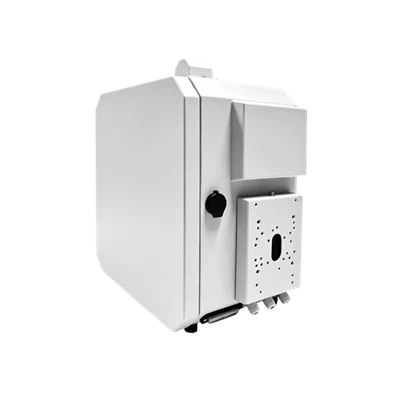
If you’re tired of your old security system that beeps for no reason, or you need something that actually catches theft or keeps your employees safe, reach out to us. We’re the detection systems supplier that actually knows what we’re doing, no sales hype, no jargon, just systems that work when you need them to. Don’t waste money on another system that gives you false alarms or misses the real stuff. Let’s talk.
Solar Power Enclosures References
- "Introduction to Physical Security Detection Systems", National Fire Protection Association, 2022.
- "LIDAR Applications in Industrial Security", International Society of Automation, 2023.
- "Reducing False Alarms in Intrusion Detection Systems", Journal of Physical Security, 2021.
- "Cloud-Based Security Control Panels Overview", Security Industry Association, 2022.
Shenzhen Gago Electronics Co., Ltd.
Shenzhen Gago Electronics Co., Ltd. is one of the most professional detection systems manufacturers and suppliers in China. As we have world-leading production equipment and strong manufacturing capabilities, we warmly welcome you to buy high quality detection systems at competitive price from our factory.
Address: C201,Building B, No.170 Xingfa Road,Shangcun Community, Gongming Street, Guangming District, Shenzhen, China
E-mail: info@gagoelectronics.com
WebSite: https://www.gagodeterrence.com/
