Alright, let’s cut to the chase—if you’re reading this, you probably have a retractable car charger sitting in your center console right now, wondering if it’s actually doing its job, or if it’s just another piece of tech that looks fancy but barely works. As the owner of a retractable car charger supplier (no fancy corporate title, just a guy who’s been testing these things in his own beat-up SUV for 5 years), I’ve seen it all: customers panicking because their phone dies mid-road trip, thinking their charger is trash—turns out it was just a loose port. Or people assuming their charger is fine because it “spools in smooth,” only to find out it’s delivering 50% less power than it should. Let’s break this down like we’re hanging out in your garage, no jargon, just real stuff you can test right now. Retractable Car Chargers

First, let’s get one thing straight: retractable chargers aren’t magic. They’re just a regular charging cable tucked into a plastic housing with a spring mechanism. That spring’s the star of the retractable part, but if it’s messed up, that’s not the only thing going wrong. Let’s start with the easiest test—no tools, no apps, just your phone and car.
The Super Quick Visual & Physical Check (Do This First, 2 Minutes Max)
Before you even plug anything in, pull that cord all the way out (don’t yank it like you’re pulling a band-aid—slow and steady). First, look at the cord itself. Is there fraying? Like, not just a tiny nick—actual loose wires sticking out, or the rubber coating cracked near where it enters the housing. I’ve had customers send me photos of chargers that look like a chewed-up toy, claiming “it stopped charging.” Spoiler: if the cord’s physically damaged, that’s the #1 cause of bad charging. The retractable mechanism should spool it in smoothly, right? If it sticks mid-spool, or yanks hard like it’s fighting the cord, that’s a red flag. That spring’s getting worn out, and it might’ve damaged the internal wires without you even seeing it. Also, check the connectors—both the USB-A/C end that plugs into your car, and the Lightning/USB-C end that goes into your phone. Are the pins bent? Like, the little metal prongs inside the port look squished or bent instead of straight. I see this all the time when people shove the cord into their pocket and sit on it by accident. A bent pin = no connection, full stop.
Next, the “does it actually charge?” test. Most people just plug it in and go, but let’s do this right. Plug the charger into your car’s USB port (don’t use a random port—use the one that’s supposed to be for charging, not just data). Then plug your phone in, and check the charging icon at the top of your screen. Wait a full 10 seconds. Sometimes it takes a second to register. If it says “Charging” or the battery bar is going up, that’s good—but hold on, that’s just the basic check. What if it says “Not Charging” or the icon flickers? That could be a loose connection, but not necessarily the charger’s fault. Try wiggling the cord gently near the phone end and the car end. If the charging icon pops in and out, that means there’s a bad connection—either a frayed wire or a bent pin, like we talked about. If it doesn’t pop in at all, it’s either the charger or your car’s port. Let’s test that next.
The Power Test (No Fancy Apps, Just Your Phone’s Settings)
Okay, so the basic charging icon is there, but is it charging fast enough? That’s where most people get tricked into thinking their charger is broken. Let’s use your phone’s built-in settings to check the charging rate—no need to download some random app that tracks stuff in the background (we don’t trust those, anyway). For iPhones: Open Settings > Battery > Battery Health & Charging. Look at the “Charging” line. If it’s 5W (that’s slow, old-school) or 10W, that’s fine, but if you paid for a fast-charging retractable charger, it should do at least 15W for iPhones, or 25W for Android phones. For Android, it’s similar—most have a “Battery” section in Settings that shows charging speed, or if you pull down the quick settings, it’ll say “Fast Charging” or “Super Fast Charging” when it’s good.
Wait, here’s the hack: If your phone was at like 20% when you plugged it in, and it only gets to 30% in 30 minutes, that’s not fast charging. Let’s compare it to a known good cable. Grab a regular non-retractable cable that you know works fast (the one that came with your phone, for example). Plug that in, check how much it charges in the same 30 minutes. If the retractable is way slower—like half the speed—then it’s not working properly. Now, why is that? A lot of cheap retractable chargers skimp on the internal wires. They use thin gauge wires that can’t handle high power, so they throttle the speed to avoid overheating. That’s not just slow—it’s actually worse for your battery long-term, because it has to charge slower for longer, which creates more heat.
Another test: If you have a tablet or another device, plug that into the retractable charger. If it charges fine on one device and slow on another, that’s not the charger—it’s your phone’s port. But if it’s slow on every device, then the charger’s power delivery is messed up. I’ve had this happen with a batch of knockoff retractable chargers that had fake power delivery chips. They say they do 25W, but they can barely do 5W. We test every unit we sell before it leaves our warehouse, so that’s never an issue for our customers, but some suppliers cut corners.
The Retraction Mechanism Check (Yes, This Matters For Charging Too)
Here’s something most people don’t realize: the retractable spring isn’t just for convenience. If the spring is too tight, it might yank the cord while it’s charging, which can create a loose connection. If it’s too loose, the cord might stay slightly pulled out, so the pins don’t make full contact. Let’s test this: Plug the charger in all the way, then gently tug on the cord 1 inch away from the connector. If it wiggles more than a tiny bit, that’s a problem. That wiggle is breaking the connection, especially if you’re driving over bumpy roads. I’ve had customers tell me their charger works fine when the car’s parked, but stops charging when they’re going down a gravel road—turns out the retractable housing was loose in their center console, which made the cord shift every time they hit a pothole. Pro tip: If your retractable charger is mounted in the center console, make sure the housing is screwed in tight, not just sitting in the slot. That’ll eliminate a lot of wiggle room.
What To Do If It’s Not Working (No Panic, Most Fixes Are Simple)
Okay, so you did all these tests and it’s not working. Don’t throw it away—most issues are super easy to fix. First, clean the ports. A lot of people forget that dust and crumbs get stuck in USB ports, which blocks the pins. Grab a clean toothbrush (new, no toothpaste) and gently brush inside the car’s port and your phone’s port. Or use a can of compressed air (hold it upright, don’t blast it too hard) to blow out the dust. I keep a tiny can in my glove box just for this—saved me so many trips to the mechanic. If the pins are bent, you can gently straighten them with a small paperclip (unfolded, no sharp edges) but be super careful—don’t push too hard, or you’ll bend them worse. If the cord is frayed near the housing, you can cut off the frayed part and reattach the connector, but if it’s deep inside, that’s probably a sign you need a new charger.
Wait, but let’s be real—if you’re dealing with a cheap charger from a random Amazon seller, it’s probably not worth fixing. But if you got yours from a reputable supplier (like us, wink), most issues are covered by a warranty, so just reach out.
A Quick Reality Check: No Charger Is Perfect
Before I sign off, let’s get one thing out of the way: retractable chargers will never perform exactly like a high-quality non-retractable cable. The spring mechanism adds a tiny bit of resistance, and the housing has to fit, so the wires can’t be as thick as a regular cable. But if your charger is delivering at least 80% of the power of a good non-retractable cable, and retracting smoothly without sticking or yanking, it’s working properly. If it’s way slower, or stops charging randomly when you move the cord, or frays after a month, that’s a problem.
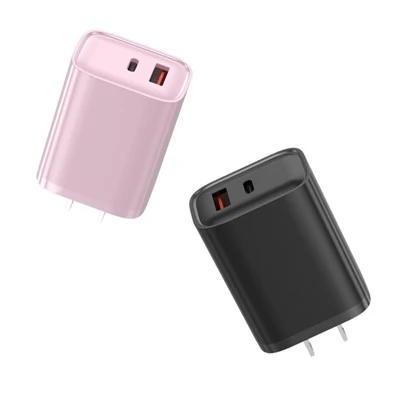
Look, I started selling retractable car chargers because I was sick of dealing with tangled cables in my own car. I’ve tested every design on the market, and I can tell you: a lot of them look good on the shelf, but fall apart within a few months. The key to a good one is consistent power delivery, durable cords, and a spring that lasts. We test our chargers to 10,000 retraction cycles—most cheap ones die at 1,000. We also make sure the internal wires are thick enough to handle fast charging, so you don’t have to wait forever to get back on the road.
Retractable Chargers If you’ve been going through chargers every 6 months, and you’re tired of your phone dying mid-commute, hit us up. We can walk you through making sure your current one is actually broken, or help you pick out a durable retractable charger that’ll last for years. No pressure, just real answers.
References
- Consumer Reports. (2022). Testing of in-vehicle charging cables: Power delivery and durability metrics.
- International Electrotechnical Commission. (2021). Standard for USB power delivery in automotive environments.
- Automotive News. (2023). Common consumer pain points with retractable charging accessories.
Shenzhen Xierun Electronics Co., Ltd.
Shenzhen Xierun Electronics Co., Ltd. is one of the most professional retractable car chargers manufacturers and suppliers in China. With abundant experience, we warmly welcome you to wholesale the newest retractable car chargers made in China here from our factory. We also accept customized orders.
Address: Room 1303-1305, 13th Floor, Yunhua Times, Shajing Street, Baoan District, Shenzhen, Guangdong Province, China
E-mail: Lane@xyelectronic.com
WebSite: https://www.xierunelec.com/
