If you’ve ever stood in a switchgear room at a manufacturing plant, data center, or commercial building during an electrical outage, you know how much is on the line. A single fault—whether from a short circuit, overload, or component failure—can halt production, take a server farm offline, or leave an entire office building in the dark. As a switchgear supplier with 18 years in this industry, I’ve walked through dozens of facilities after such events, and more often than not, the root cause traces back to one thing: poor maintenance access or inflexible equipment that forces you to shut down an entire system to fix a single faulty part. That’s why, for years now, we’ve recommended withdrawable switchgear to our clients, and today I want to break down exactly why it’s become the gold standard for reliable, efficient electrical distribution—no sales jargon, just real-world insights from someone who’s seen the difference it makes. Switchgear
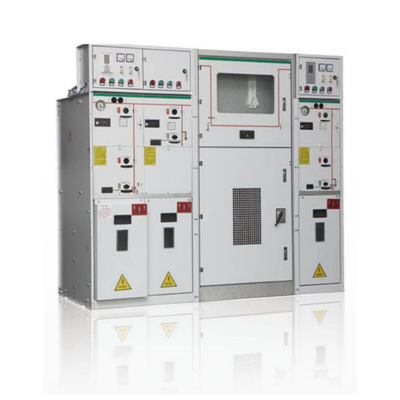
First, let’s cut through the confusion: withdrawable switchgear isn’t a new technology, but it’s evolved a lot from its early versions in the mid-20th century. Unlike fixed switchgear, where every circuit breaker, fuse, or control component is bolted permanently into the main busbar chamber, withdrawable switchgear uses a removable, cradle-mounted design. Every functional unit—called a “drawout” or “withdrawable element”—slides into a dedicated compartment, connected to the main bus via insulating plugs and secondary wiring that clicks into place. With a simple turn of a lever, you can pull the entire element out completely, leaving the rest of the switchgear and the connected electrical system untouched. That single difference is where all the advantages start.
Let’s start with the biggest one: minimal downtime during maintenance or repairs. Back in 2017, we had a client— a mid-sized automotive parts plant in the Midwest—call us in a panic. Their fixed switchgear had a circuit breaker in the assembly line compartment that had tripped, and their maintenance team couldn’t figure out why. When they pried the panel open to check, they accidentally damaged the busbar, which fed three other lines. By the time they fixed the breaker and replaced the busbar, the assembly line was down for 12 hours. The plant loses $45,000 an hour when that line stops; you do the math on the total cost. A few months later, we installed a withdrawable switchgear system for their new expansion. Last year, that same assembly line had a minor fault in its circuit breaker—one of their technicians pulled the faulty element out in 2 minutes, swapped in a pre-tested spare element we keep on site, and the line was back up in 3 minutes total. No need to shut down the entire switchgear, no lost production beyond those 3 minutes. That level of flexibility isn’t a nice-to-have anymore; for facilities where downtime equals revenue loss, it’s non-negotiable.
It’s not just emergency repairs, either. Scheduled maintenance is a huge part of keeping switchgear running safely, and withdrawable designs make that far simpler. With fixed gear, every time you need to inspect or test a breaker, you have to isolate the entire compartment, lock it out, and sometimes shut down adjacent circuits to get enough access. With withdrawable, you pull the element out, work on it in a dedicated, well-lit space right in the switchgear room (no crawling around in tight, dusty panels), test it off-line, and put it back. We recently worked with a data center client where their annual switchgear maintenance used to take 16 hours, requiring them to shift 20% of their server load to backup generators for the whole window. After switching to withdrawable gear, that same maintenance took 2.5 hours, and they only had to redistribute load for 45 minutes during the element swaps. That’s a massive win for both operational efficiency and safety—less time working in high-voltage areas means fewer risk of arc flashes, which are one of the biggest hazards in switchgear rooms.
Speaking of arc flash safety, that’s another underrated advantage of withdrawable switchgear. Arc flashes—explosive bursts of heat and energy that happen when electricity jumps across a gap—can reach temperatures of 35,000°F, hot enough to melt steel and kill a person instantly. Most switchgear accidents happen when technicians are working on live or recently powered equipment, and fixed gear amplifies that risk because you can’t isolate a single component without exposing adjacent live parts. With withdrawable gear, the drawout element has three distinct positions: connected (powered and ready to operate), test (disconnected from the main bus, but still wired to controls to test functionality), and disconnected (completely isolated, with insulating barriers covering the bus and plug). So when a tech is working on a component, they pull it to the disconnected position, and there’s zero live parts in the area they’re working on. We’ve trained hundreds of maintenance teams on this, and we’ve seen firsthand how it cuts down on near-misses. Last year, a construction firm we work with had a tech pull a faulty element on a fixed system by mistake—there was no way to test it without exposing him to live wires, so we had to send a specialized team to do the job after hours, costing them $12,000 in overtime. On a withdrawable system, that same tech could have tested the element in test position that same afternoon, no extra cost, no risk.
Flexibility for future growth is another big one, especially for businesses that scale quickly or evolve their operations. Fixed switchgear is designed for a specific load; if you add a new production line or expand a facility, you either have to buy an entirely new switchgear system or do expensive retrofits to modify the busbars and compartments. With withdrawable switchgear, every compartment is standardized. If you need to add a new circuit, you just install a new drawout element in an empty compartment, plug it into the bus, and configure the controls. No rewiring of the main bus, no shutting down the entire system for days. For example, a food processing client we’ve worked with since 2019 added two new production lines in 2021 and another in 2023. Each time, their existing withdrawable switchgear had empty compartments ready to use; we just supplied the drawout elements, and they had the new lines online in a matter of hours, not weeks. That scalability isn’t just convenient—it’s a huge cost saver. Retrofitting fixed switchgear for a new load can cost 30-50% of the price of a new system, whereas adding elements to withdrawable gear is less than 10% of that cost.
Wait, but let’s address the common pushback I hear from clients: “Is withdrawable switchgear more expensive upfront?” It’s true that the initial cost is slightly higher than fixed gear—usually around 15-20% more for a comparable system. But when you factor in downtime costs, maintenance labor, and scalability, that premium pays for itself within 2-3 years. Let’s go back to that automotive plant I mentioned earlier: their initial fixed gear cost $120,000, and the first repair cost them $540,000 in lost production. Their new withdrawable system cost $140,000, and in the last 6 years, they’ve had three minor component issues, all fixed in under 10 minutes each, with no lost production. The total cost of ownership over 10 years? The withdrawable system was $280,000 less than the fixed system, even with the upfront premium. That math is hard to ignore.
I also want to talk about testing and validation, which is critical for switchgear that has to meet electrical codes like NFPA 70 or IEC 62271. With withdrawable elements, each component can be fully tested and validated off-site or in a controlled environment before installation, which reduces the risk of defects. When you work with a supplier like us, every drawout element is factory-tested 3 times: once during assembly, once after functional testing, and again before shipment. For fixed gear, you often have to test the entire system on-site, which can lead to missed issues because you’re working with the whole assembly, not individual parts. That’s a big deal for compliance—facilities have to pass annual electrical inspections, and withdrawable gear makes that process faster and more reliable because you can test each component independently.
Of course, no technology is perfect, and it’s important to be transparent about the limitations. Withdrawable switchgear requires regular inspection of the plug connections between the element and the bus—over time, dust or wear can cause poor connections, which can lead to overheating. But that’s a small task, and it’s part of a standard maintenance routine, unlike the bigger, more frequent issues that come with fixed gear. Also, the spare element requirement: to get the full benefit of minimal downtime, you should keep a pre-tested spare element on hand for each critical compartment. That’s a small investment, and it’s way cheaper than the alternative of hours of downtime. We always work with clients to size their spare parts inventory based on their specific needs, so they never have to overbuy.
At the end of the day, switchgear is the backbone of any electrical system, and choosing the right type isn’t just about equipment—it’s about protecting your operations, your revenue, and your team. As a supplier who’s been in this for almost two decades, I’ve seen clients make the wrong choice because they focused only on upfront cost, not total value. The withdrawable design isn’t a fancy upgrade; it’s a practical solution that solves some of the most common, expensive problems in electrical distribution: unplanned downtime, high maintenance costs, safety risks, and inflexible growth.
If you’re currently reviewing switchgear for a new project, or if your existing system is causing you headaches with outages or complicated maintenance, I’d encourage you to look closely at withdrawable designs. We’ve worked with facilities of all sizes—from small warehouses to large data centers—and we can help you assess what’s right for your specific load, budget, and long-term goals. We don’t push one size fits all, but we do share the insights we’ve gained from thousands of projects, because at the end of the day, our success is tied to your success.

If you’d like to learn more about how withdrawable switchgear could work for your operations, we’d be happy to discuss your needs in detail.
Low Voltage Switchgear References
- National Fire Protection Association. (2023). NFPA 70: National Electrical Code. Quincy, MA: National Fire Protection Association.
- International Electrotechnical Commission. (2021). IEC 62271-200: High-voltage switchgear and controlgear – Part 200: AC metal-enclosed switchgear and controlgear for rated voltages above 1 kV up to and including 52 kV. Geneva, Switzerland: International Electrotechnical Commission.
- Electrical Construction Maintenance. (2022). “Withdrawable vs. fixed switchgear: Weighing costs, benefits for industrial applications.” Retrieved from industry trade journal archives.
- IEEE Industry Applications Society. (2021). “Arc flash risk reduction with withdrawable switchgear for industrial facilities.” IEEE Transactions on Industry Applications, vol. 57, no. 4, pp. 3892-3898.
Huachi Electric Co., Ltd.
We’re well-known as one of the leading switchgear manufacturers in China, featured by quality products and good service. Please rest assured to buy customized switchgear made in China here from our factory. Contact us for more details.
Address: Plastic Park, Tongyu Street, Luqiao District, Taizhou City, Zhejiang Province
E-mail: HCDQ2026@163.com
WebSite: https://www.huachi-electric.com/
