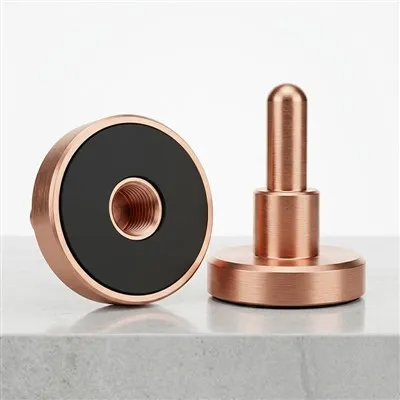
In the world of manufacturing and industrial applications, end stop brackets play a crucial role in the precise positioning of equipment and components. As a supplier of end stop brackets, I’ve had the privilege of witnessing firsthand how these small but vital parts can influence the overall performance and accuracy of various systems. But the question remains: how accurate are end stop brackets in positioning? Let’s delve into this topic and explore the factors that determine their positioning accuracy. End Stop Bracket
Understanding End Stop Brackets
End stop brackets are mechanical devices designed to limit the movement of a moving part within a defined range. They are commonly used in a wide range of applications, from conveyor systems and linear guides to automated machinery and robotics. Their primary function is to provide a physical barrier that stops the movement of an object at a specific point, ensuring that it remains in the desired position.
The accuracy of end stop brackets in positioning largely depends on the design, manufacturing process, and the materials used. A well-designed end stop bracket will have precise dimensions and a robust construction that can withstand the forces applied during operation. Additionally, the surface finish and the alignment of the bracket can also affect its positioning accuracy.
The Design Factor
The design of an end stop bracket is a critical factor in determining its positioning accuracy. A good design should take into account the specific requirements of the application, including the type of movement, the forces involved, and the environmental conditions. For example, in applications where high precision is required, such as in semiconductor manufacturing, the end stop bracket may need to be designed with extremely tight tolerances to ensure accurate positioning.
One of the key design considerations is the shape of the bracket. A bracket with a simple and symmetrical shape is generally easier to manufacture and maintain, which can lead to better accuracy. Additionally, the design should allow for easy installation and adjustment, so that the bracket can be properly aligned with the moving part.
Another important design factor is the use of features that enhance the stability and rigidity of the bracket. For example, some end stop brackets may have ribs or gussets to increase their strength and prevent deformation under load. These features can help to ensure that the bracket remains in the correct position, even when subjected to high forces.
Manufacturing Precision
The manufacturing process also plays a significant role in the accuracy of end stop brackets. High-quality manufacturing techniques, such as CNC machining, can produce brackets with very tight tolerances, ensuring that they meet the required specifications. CNC machining is a computer-controlled process that allows for precise cutting and shaping of the bracket, resulting in a high level of accuracy and repeatability.
In addition to CNC machining, other manufacturing processes, such as casting and forging, can also be used to produce end stop brackets. However, these processes may have limitations in terms of the accuracy and surface finish that can be achieved. Therefore, it is important to choose the appropriate manufacturing process based on the specific requirements of the application.
Quality control is another crucial aspect of the manufacturing process. A reliable supplier will have strict quality control measures in place to ensure that each bracket meets the highest standards of accuracy and performance. This may include inspections at various stages of production, as well as final testing to verify the positioning accuracy of the bracket.
Material Selection
The choice of material for end stop brackets can also affect their positioning accuracy. Different materials have different properties, such as strength, hardness, and thermal expansion coefficients, which can influence the performance of the bracket. For example, a bracket made of a high-strength material, such as steel, will be able to withstand higher forces and provide better stability than a bracket made of a softer material, such as aluminum.
In addition to strength, the material’s corrosion resistance is also an important consideration, especially in applications where the bracket will be exposed to harsh environments. For example, stainless steel is a popular choice for end stop brackets in marine and food processing applications due to its excellent corrosion resistance.
Another factor to consider is the material’s thermal expansion coefficient. In applications where the temperature can vary significantly, a material with a low thermal expansion coefficient is preferred to minimize the effects of thermal expansion on the positioning accuracy of the bracket.
Environmental Factors
Environmental factors can also have an impact on the positioning accuracy of end stop brackets. Temperature, humidity, and vibration are some of the common environmental factors that can affect the performance of the bracket. For example, high temperatures can cause the material to expand, which can lead to changes in the dimensions of the bracket and affect its positioning accuracy.
Similarly, high humidity levels can cause corrosion and rust, which can weaken the bracket and affect its stability. Vibration, on the other hand, can cause the bracket to loosen or shift, leading to inaccurate positioning.
To minimize the effects of environmental factors, it is important to choose the appropriate material and design the bracket to be resistant to these factors. For example, in applications where high temperatures are expected, a heat-resistant material can be used, and the bracket can be designed with features to dissipate heat.
Real-World Applications
To understand the importance of positioning accuracy in end stop brackets, let’s look at some real-world applications. In a conveyor system, for example, accurate positioning of the end stop brackets is essential to ensure that the products are transferred smoothly and without damage. If the brackets are not accurately positioned, the products may collide with each other or with the sides of the conveyor, leading to product damage and downtime.
In automated machinery and robotics, end stop brackets are used to control the movement of the robot arms and other components. In these applications, high precision is required to ensure that the robot can perform its tasks accurately and efficiently. Any errors in the positioning of the end stop brackets can result in inaccurate movements and reduced productivity.
Measuring and Achieving Accuracy
So, how can we measure the accuracy of end stop brackets in positioning? One common method is to use a coordinate measuring machine (CMM), which can accurately measure the dimensions and position of the bracket to within a few micrometers. Another method is to use optical measurement systems, which can provide high-resolution images of the bracket and allow for precise measurement of its position.
To achieve the highest level of accuracy, it is important to work with a supplier who has the expertise and experience in manufacturing end stop brackets. A reliable supplier will be able to provide custom solutions based on the specific requirements of the application and ensure that the brackets are manufactured to the highest standards of accuracy and quality.
Conclusion
In conclusion, the accuracy of end stop brackets in positioning depends on a variety of factors, including design, manufacturing precision, material selection, and environmental conditions. By carefully considering these factors and working with a reputable supplier, it is possible to achieve a high level of accuracy in positioning, which is essential for the optimal performance of various industrial applications.
Damper If you are in the market for high-quality end stop brackets and are looking for a supplier who can provide accurate and reliable products, I encourage you to reach out to us. We have extensive experience in manufacturing end stop brackets for a wide range of industries and can offer customized solutions to meet your specific needs. Contact us today to discuss your requirements and let’s start a conversation about how we can help you achieve your positioning accuracy goals.
References
- ASME B46.1 – Surface Texture (Surface Roughness, Waviness, and Lay)
- ISO 2768 – General Tolerances for Linear and Angular Dimensions without Tolerance Indications
Tianjin TGE BIAM Graphene Technology Co., Ltd.
Tianjin TGE BIAM Graphene Technology Co., Ltd. is one of the most professional end stop bracket manufacturers and suppliers in China, also supports customized service. Please feel free to buy bulk advanced end stop bracket in stock here from our factory. For quotation, contact us now.
Address: No. 24 Sanjing Road, Dongli Development Zone, Tianjin City, China.
E-mail: sales@tge-tj.com
WebSite: https://www.tge-valve.com/
