As a reputable supplier in the field of resistance testers, I often encounter various inquiries from customers regarding the capabilities and applications of our products. One recurrent question that has piqued my interest is: Can a resistance tester measure the resistance of a film resistor? In this blog post, I aim to provide a comprehensive answer to this question, delving into the technical aspects, limitations, and practical considerations involved. Resistance Tester
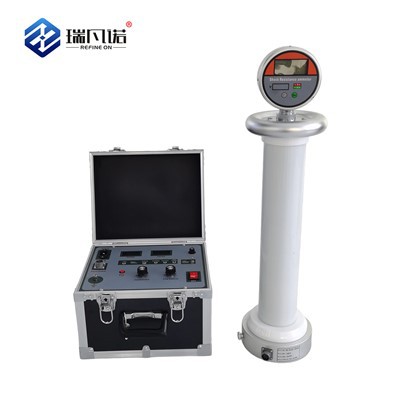
Understanding Film Resistors
Before we explore the ability of a resistance tester to measure film resistors, it’s essential to understand what film resistors are. Film resistors are a type of passive electronic component used to limit or control the flow of electric current in a circuit. They are made by depositing a thin film of resistive material, such as carbon, metal, or metal oxide, onto an insulating substrate. The resistance value of a film resistor is determined by the composition, thickness, and length of the resistive film.
Film resistors offer several advantages over other types of resistors, including high precision, low noise, and good temperature stability. They are commonly used in a wide range of electronic applications, such as audio amplifiers, power supplies, and precision measurement instruments.
How Resistance Testers Work
Resistance testers, also known as ohmmeters, are electrical measuring instruments used to measure the electrical resistance of a component or circuit. They work by applying a known voltage across the component under test and measuring the resulting current flowing through it. According to Ohm’s Law (V = IR), where V is the voltage, I is the current, and R is the resistance, the resistance can be calculated by dividing the voltage by the current (R = V / I).
There are two main types of resistance testers: analog and digital. Analog resistance testers use a moving pointer on a scale to indicate the resistance value, while digital resistance testers display the resistance value on a digital screen. Digital resistance testers are more accurate and easier to read than analog testers, and they are commonly used in modern electronic testing and measurement applications.
Measuring the Resistance of Film Resistors
So, can a resistance tester measure the resistance of a film resistor? The answer is yes, most resistance testers can measure the resistance of film resistors. However, there are several factors that need to be considered to ensure accurate and reliable measurements.
1. Resistance Range
The first factor to consider is the resistance range of the film resistor. Film resistors are available in a wide range of resistance values, from a few ohms to several megaohms. It’s important to choose a resistance tester with a suitable resistance range to ensure accurate measurements. If the resistance value of the film resistor is outside the range of the resistance tester, the measurement may be inaccurate or impossible.
2. Measurement Accuracy
The measurement accuracy of the resistance tester is another important factor to consider. The accuracy of a resistance tester is typically specified as a percentage of the measured value, plus a fixed offset. For example, a resistance tester with an accuracy of ±0.5% + 1 digit means that the measured value may be off by up to 0.5% of the actual value, plus an additional 1 digit. When measuring the resistance of film resistors, it’s important to choose a resistance tester with a high enough accuracy to meet the requirements of the application.
3. Test Lead Resistance
The resistance of the test leads used to connect the resistance tester to the film resistor can also affect the measurement accuracy. Test leads have a certain amount of resistance, which can add to the measured resistance value. To minimize the effect of test lead resistance, it’s important to use high-quality test leads with low resistance and to keep the test lead length as short as possible.
4. Temperature and Humidity
The resistance of a film resistor can be affected by temperature and humidity. As the temperature increases, the resistance of a film resistor may increase or decrease, depending on the type of resistive material used. Similarly, changes in humidity can also affect the resistance of a film resistor. To ensure accurate measurements, it’s important to measure the resistance of the film resistor at a stable temperature and humidity.
5. Contact Resistance
The contact resistance between the test leads and the film resistor can also affect the measurement accuracy. Contact resistance is the resistance that occurs at the interface between two conductors when they are in contact with each other. To minimize the effect of contact resistance, it’s important to ensure that the test leads make good contact with the film resistor and that the contact area is clean and free of debris.
Limitations of Resistance Testers
While resistance testers are useful tools for measuring the resistance of film resistors, they do have some limitations. One limitation is that resistance testers can only measure the DC resistance of a component. If the film resistor is used in an AC circuit, the resistance value may be different due to the effects of capacitance and inductance. In such cases, a more advanced measuring instrument, such as an LCR meter, may be required to measure the impedance of the film resistor.
Another limitation of resistance testers is that they may not be able to measure the resistance of very high-value or very low-value film resistors accurately. For very high-value resistors, the leakage current of the resistance tester may affect the measurement accuracy. For very low-value resistors, the contact resistance and test lead resistance may be comparable to the resistance value of the film resistor, making it difficult to obtain accurate measurements.
Practical Considerations
When using a resistance tester to measure the resistance of film resistors, there are several practical considerations that need to be kept in mind.
1. Safety Precautions
Before measuring the resistance of a film resistor, it’s important to ensure that the circuit is powered off and that the film resistor is not connected to any voltage source. This will prevent electrical shock and damage to the resistance tester.
2. Calibration
To ensure accurate measurements, it’s important to calibrate the resistance tester regularly. Calibration involves comparing the measurements of the resistance tester with a known standard resistor to ensure that the measurements are accurate. Most resistance testers come with a calibration procedure that can be performed using a calibration resistor.
3. Measurement Procedure
When measuring the resistance of a film resistor, it’s important to follow the correct measurement procedure. This involves placing the test leads of the resistance tester across the terminals of the film resistor and ensuring that the test leads make good contact with the terminals. The resistance value can then be read from the display of the resistance tester.
Conclusion
In conclusion, a resistance tester can measure the resistance of a film resistor. However, several factors need to be considered to ensure accurate and reliable measurements, including the resistance range, measurement accuracy, test lead resistance, temperature and humidity, and contact resistance. While resistance testers are useful tools for measuring the resistance of film resistors, they do have some limitations, and more advanced measuring instruments may be required for certain applications.
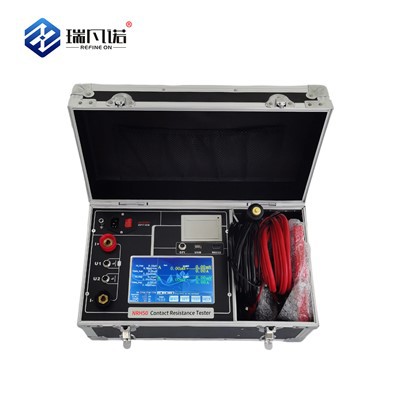
As a resistance tester supplier, we offer a wide range of high-quality resistance testers that are suitable for measuring the resistance of film resistors and other electronic components. Our products are designed to provide accurate and reliable measurements, and we offer excellent customer support to ensure that our customers get the most out of their resistance testers.
Resistance Tester If you are interested in purchasing a resistance tester or have any questions about our products, please feel free to contact us. Our team of experts will be happy to assist you with your purchase and provide you with the information you need to make an informed decision.
References
- Ohm, Georg Simon. "Die galvanische Kette, mathematisch bearbeitet." (1827).
- Horowitz, Paul, and Winfield Hill. "The Art of Electronics." Cambridge University Press, 2015.
- Floyd, Thomas L. "Principles of Electric Circuits." Pearson Education, 2013.
Refine On (Hebei) Electric Power Technology Co., Ltd.
Refine On (Hebei) Electric Power Technology Co., Ltd. is one of the most reliable resistance tester manufacturers and suppliers in China, also supports customized service. Please feel free to wholesale advanced resistance tester at competitive price from our factory. Contact us for quotation.
Address: Building 13, Liandong U Valley, No.64, Jing SAN South Street, Economic Development Zone, Mancheng District, Baoding City, China
E-mail: victor@transformer-test.com
WebSite: https://www.transformer-test.com/
