Hey there, let’s cut to the chase: if you’ve ever worked with hydraulic or pneumatic systems, you’ve probably heard of bonded seals. And if you’re here, you’re probably stuck on one question—what even is “hardness” when people talk about these little game-changing parts? As a bonded seal supplier who’s been in this game for over a decade, I’ve fielded this question more times than I can count, and the short answer is it’s not just a random number on a spec sheet—it’s what makes or breaks whether that seal stops leaking mid-shift (or lasts 10 years without a hitch). Let’s break this down like we’re chatting over coffee, no stuffy engineering jargon that makes your eyes glaze over. Bonded Seal
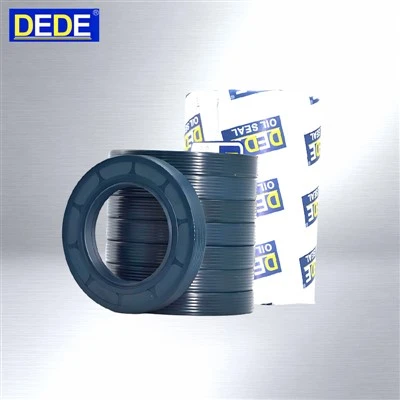
First off, let’s get one thing straight: bonded seals are different from regular O-rings. They’re that hybrid part—usually a metal core (think steel, sometimes stainless or brass) with a soft elastomer (rubber-like) layer molded or bonded right on top. That metal core is the skeleton, and the elastomer is the seal that squishes into place to block fluid or gas. So when people ask about hardness, they’re almost always talking about that elastomer layer, not the metal core (unless we’re being super specific, and we’ll get to that later).
Now, how do we measure this hardness? You’ve probably heard of the Shore scale—Shore A and Shore D, mostly. Let’s keep it simple: Shore A is for soft, squishy stuff like rubber bands or pencil erasers, and Shore D is for harder materials, like hard plastic or skateboard wheels. Most bonded seals use Shore A, because they need that flexibility to conform to uneven surfaces (think rough machined flanges or bolt holes) and create a tight seal. For context, a Shore A hardness of 50 is like a new basketball, 70 is a good solid eraser, and 90 is pretty darn rigid—like a thick hard hat shell.
Wait, but why does this even matter for a bonded seal? Let’s take a real-world example: if you’ve got a hydraulic system on a construction site, or a machine at a factory that’s running 24/7. If your seal is too soft (say Shore A 40), it’ll squish too much when you torque the bolts down. Sure, it seals at first, but over time, all that pressure will push it out of the groove, or it’ll get damaged when you’re tightening the bolts—boom, leak before you even fire up the machine. On the flip side, if it’s too hard (Shore A 90), it can’t flex enough to fit into small gaps or conform to slightly uneven surfaces. You’ll end up with gaps between the seal and the surface, which means fluid seeps out. No good.
So what’s the sweet spot for bonded seals? From my experience as a supplier, most of our standard bonded seals run between Shore A 60 and 80. Why that range? It’s the balance zone. 60 is soft enough to conform to minor surface imperfections—like a tiny scratch in a flange that’s too small to fix with machining. 80 is hard enough to hold its shape during installation, so you don’t have to baby it when tightening bolts, and it can handle higher pressure systems without deforming. We tweak it based on the application too, of course. If someone needs a seal for a high-pressure hydraulic press? We lean more towards 75-80 Shore A. If they need a seal for a low-pressure pneumatic line with tight, small parts? Maybe 65-70. It’s all about matching the hardness to what the seal is actually going through.
Wait a second, I mentioned the metal core earlier—why does that factor into hardness? The metal itself isn’t measured in Shore, but it does play a huge role in how the seal performs overall. For example, if you’re working in a super corrosive environment (like food processing equipment or chemical plants), we use stainless steel cores, which are a bit harder than regular carbon steel, so they resist rust and hold their shape even when the elastomer is flexing. Carbon steel cores are cheaper, so we use those for general-purpose applications, and they’re hard enough for most standard setups. The metal’s hardness complements the elastomer’s—you don’t want a floppy metal core holding up a soft elastomer, same as you don’t want a rock-hard elastomer paired with a weak metal core that bends when you torque bolts.
Let’s talk about common myths I hear all the time. Myth #1: “Harder is always better.” Nope, I’ve seen seals with Shore A 90 crack when the machine vibrates—they’re so rigid they can’t absorb movement, so they split. Myth #2: “All hardness scales work the same.” No way—Shore A and Shore D aren’t interchangeable. If a part is Shore D 50, that’s way harder than Shore A 50, like 10x harder, basically. We have to double-check specs all the time, because customers mix those up more than you’d think. Myth #3: “Hardness is the only thing that matters.” Yeah, no—material type (nitrile, EPDM, Viton) plays a role too. A Viton seal at Shore A 70 is way more heat-resistant than a nitrile one at the same hardness, so hardness isn’t the end-all-be-all, but it’s the foundation.
So how do we pick the right hardness for a custom order? When a customer reaches out to me, the first questions I ask are: What’s the system pressure? What’s the temperature range it’ll be exposed to? What’s the surface finish of the flanges or grooves it’s going into? And is there any vibration or movement involved? If they don’t know the answers, I’ll ask them to send over their spec sheet or even a sample of the part it’s going into. For example, last month a customer called panicking because their bonded seals were leaking on a farm tractor hydraulic lift. They’d been using Shore A 50 seals because they thought softer was better for fitting, but the high pressure (over 2000 PSI) was squishing them out. We swapped them for Shore A 75, and boom, no more leaks. Another customer doing food processing needed EPDM bonded seals for a conveyor system, and the FDA required a Shore A 65 to be flexible enough for food-grade cleaning solutions and tight gaps. That’s the kind of back-and-forth we do every day as a supplier—we don’t just send a part, we make sure it works for their specific job.
Wait, what about testing hardness? We do that in our shop with a Shore durometer—super simple tool, like a little metal pin you press into the elastomer, and it gives you a number. We test every batch to make sure it’s within ±2 Shore points of what we quote—consistency is key, right? If one batch is 68 and another is 72, that’s a 50% difference in softness, which would cause some of them to leak. We also test for how the hardness holds up over time—like, will the elastomer harden from heat exposure? That’s called “aging,” and we account for that when we recommend hardness. If a seal is going to be exposed to 200°C (392°F) for years, we’ll pick a slightly softer Shore A so it doesn’t get too hard as it ages, because aged seals are more likely to crack.
Let’s wrap this up with why this matters for you, the person buying these seals. If you’re a maintenance tech on a factory floor, or a engineer designing a new machine, or even a hobbyist fixing your old tractor—getting the hardness right means less downtime, less money wasted on replacement seals, and less headaches. As a bonded seal supplier, our job isn’t just to sell you a part that has a Shore number on it. It’s to make sure that number is the right one for your application, so your machine runs smooth, no leaks, no stress.
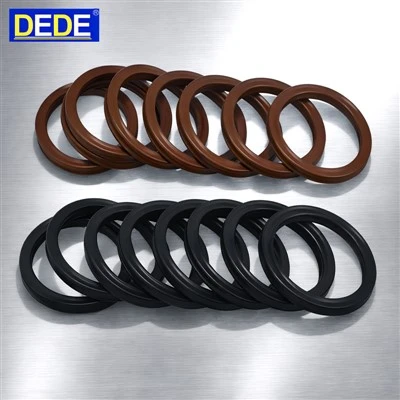
If you’re dealing with a project right now and you’re not sure what hardness you need, hit us up. We’ll walk you through the questions, get you the right part, no confusing sales jargon, no hidden fees. We’ve got standard seals in stock for most common uses, and we can do custom ones if you have a weird, specific application. Don’t waste time guessing—reach out, let’s make sure your bonded seals are hard in all the right ways.
Rubber X Ring References:
- Shaw, M. C., & Rips, I. F. (1995). Seal Design Handbook. Marcel Dekker.
- ASME B1.20.1-2013, Pipe Threads, General Purpose (Inch). American Society of Mechanical Engineers.
- Rubber & Plastics News. (2021). Understanding Durometer Hardness Testing for Elastomers. KWI Media.
- Hydraulic Seal Technology Association. (2020). Bonded Seals: Selection, Installation, and Maintenance Guidelines. HSTA Publications.
DEDE SEAL Co., Ltd.
DEDE Seal Co., Ltd. is one of the most experienced bonded seal manufacturers and suppliers in China for over 35 years, featured by quality products and good price. Please feel free to buy bulk customized bonded seal made in China here from our factory. Welcome to contact us for pricelist.
Address: Hunan Road, Pudong New Area, Shanghai, China
E-mail: info@dedeseal.com
WebSite: https://www.dedesealing.com/
