Selecting the appropriate needle roller bearing is a crucial decision for industries and applications relying on high – performance rotational components. As a seasoned needle roller bearing supplier, I’ve witnessed firsthand the far – reaching impact of this choice on product performance, reliability, and overall operational costs. In this blog, I’ll share some key factors and guidelines to help you make the right decision when it comes to choosing needle roller bearings. Needle Roller Bearing

1. Understanding Your Application Requirements
The first step in choosing the correct needle roller bearing is to have a comprehensive understanding of your specific application. Different applications have different demands in terms of load capacity, speed, operating temperature, and environmental conditions.
Load Capacity
Load capacity is one of the most critical factors. Needle roller bearings are designed to handle different types of loads, including radial, axial, and combined loads. Radial loads act perpendicular to the shaft, while axial loads act parallel to the shaft. For applications with high radial loads, such as in automotive transmissions or industrial gearboxes, bearings with a large number of needles and a robust cage design are typically required. For example, in a heavy – duty gearbox where the torque transfer is significant, a full – complement needle roller bearing (without a cage) may be more suitable as it can accommodate higher radial loads due to the increased number of rolling elements.
Conversely, if your application involves a combination of radial and axial loads, like in some types of pumps or compressors, you may need to consider thrust needle roller bearings or angular contact needle roller bearings. These bearings can handle both types of loads simultaneously, providing a more stable and efficient solution.
Speed Requirements
The rotational speed of your application also plays a vital role. High – speed applications, such as in electric motors or machine tool spindles, demand needle roller bearings with low friction and excellent dynamic performance. The cage design is particularly important in high – speed applications. A well – designed cage can ensure proper spacing and alignment of the needles, reducing friction and preventing skidding. For example, a machined brass cage is often used in high – speed applications because of its good wear resistance and high – temperature stability.
On the other hand, if your application operates at low speeds, you may have more flexibility in terms of cage material and design. Simple stamped steel cages can be sufficient for low – speed, low – to – medium – load applications, as they are cost – effective and can still provide adequate performance.
Operating Temperature
The operating temperature range of your application can significantly affect the performance and lifespan of needle roller bearings. Extreme temperatures can cause changes in the material properties of the bearing components, such as the expansion or contraction of the raceways and needles. In high – temperature applications, like in some industrial ovens or exhaust systems, bearings made from high – temperature – resistant materials, such as special steels or ceramics, are required. These materials can maintain their mechanical properties at elevated temperatures, preventing premature wear and failure.
In low – temperature environments, such as in cold storage facilities or cryogenic applications, the lubrication of the bearings becomes a critical issue. Special low – temperature lubricants should be used to ensure proper lubrication and prevent the lubricant from thickening or solidifying, which could lead to increased friction and potential bearing damage.
Environmental Conditions
The environment in which the needle roller bearing operates is another important consideration. If the application is in a dirty or dusty environment, such as in construction equipment or mining machinery, the bearing needs to have good sealing to prevent contaminants from entering. Sealed needle roller bearings with rubber seals or metal shields can effectively keep out dirt, dust, and moisture, thereby extending the bearing’s service life.
In corrosive environments, such as in chemical processing plants or marine applications, bearings made from corrosion – resistant materials, like stainless steel or ceramic, are necessary. Additionally, appropriate surface treatments, such as galvanization or coating with anti – corrosion agents, can further enhance the bearing’s resistance to corrosion.
2. Bearing Design and Type
There are several types of needle roller bearings available, each with its own unique design and characteristics. Understanding these different types can help you select the most suitable bearing for your application.
Full – Complement Needle Roller Bearings
Full – complement needle roller bearings do not have a cage, which allows for the maximum number of needles to be packed into the bearing. This results in a high radial load – carrying capacity. However, they typically have a lower maximum speed compared to caged needle roller bearings because of the increased friction between the needles. Full – complement bearings are commonly used in applications where high radial loads and relatively low speeds are involved, such as in heavy – duty machinery and construction equipment.
Caged Needle Roller Bearings
Caged needle roller bearings have a cage that separates and guides the needles. This design reduces friction between the needles, allowing for higher rotational speeds. The cage also helps to distribute the load evenly among the needles, improving the bearing’s overall performance and reliability. Caged needle roller bearings are available in various cage materials, such as stamped steel, machined brass, and engineered plastics, each offering different advantages in terms of cost, weight, and performance. They are widely used in a variety of applications, including automotive engines, electric motors, and precision machinery.
Thrust Needle Roller Bearings
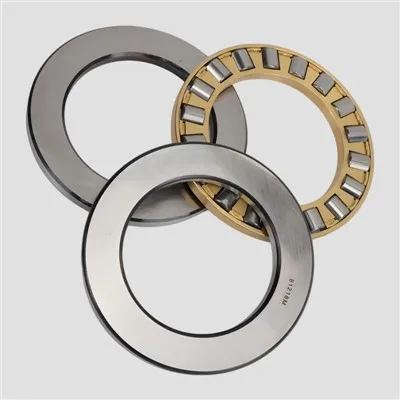
Thrust needle roller bearings are designed to handle axial loads. They consist of needle rollers arranged in a cage and two washers. Thrust needle roller bearings are commonly used in applications where axial forces need to be supported, such as in aerospace engines, automotive transmissions, and machine tools. They can offer high axial load capacity in a relatively small axial space.
Angular Contact Needle Roller Bearings
Angular contact needle roller bearings are capable of handling both radial and axial loads. They have a contact angle that enables them to transmit the loads in a specific direction. These bearings are often used in applications where combined loads are present, such as in high – performance machine tool spindles and automotive wheel hubs.
3. Material Selection
The choice of material for needle roller bearings is crucial as it directly affects the bearing’s performance, durability, and cost.
Bearing Steel
The most common material for needle roller bearings is high – carbon chromium bearing steel, such as AISI 52100. This steel offers excellent hardness, wear resistance, and fatigue strength, making it suitable for a wide range of applications. It can withstand high loads and repeated stress cycles without significant deformation or wear.
Stainless Steel
Stainless steel is used in applications where corrosion resistance is required. Austenitic stainless steels, such as AISI 304 and AISI 316, are commonly used for needle roller bearings in food processing, medical equipment, and marine applications. Although stainless steel bearings have slightly lower hardness and load – carrying capacity compared to bearing steel, their corrosion resistance makes them indispensable in certain environments.
Ceramic
Ceramic materials, such as silicon nitride (Si₃N₄), are increasingly being used in high – performance needle roller bearings. Ceramic bearings offer several advantages, including high hardness, low density, and excellent corrosion resistance. They also have a lower coefficient of thermal expansion, which allows them to maintain their dimensional stability at high temperatures. Ceramic needle roller bearings are often used in high – speed, high – temperature, and high – precision applications, such as in aerospace and semiconductor manufacturing.
4. Quality and Reliability
When choosing a needle roller bearing, it’s essential to consider the quality and reliability of the product. Here are some ways to ensure that you are getting a high – quality bearing:
Manufacturer Reputation
Choose a reliable and well – established manufacturer. A reputable manufacturer will have strict quality control processes in place, ensuring that their bearings meet or exceed industry standards. Look for manufacturers with certifications such as ISO 9001, which indicates that they have a quality management system in place.
Testing and Certification
High – quality needle roller bearings should undergo rigorous testing before leaving the factory. Tests may include hardness testing, dimensional inspection, and performance testing under various conditions. Make sure that the bearings you purchase come with appropriate certifications and documentation to verify their quality.
Warranty and After – Sales Support
A good manufacturer will offer a warranty on their products and provide excellent after – sales support. This gives you peace of mind knowing that you can get assistance if any issues arise with the bearings during their service life.
5. Cost – Effectiveness
While quality and performance are important, cost – effectiveness is also a significant consideration. When evaluating the cost of needle roller bearings, it’s important to consider the total cost of ownership, rather than just the initial purchase price.
Initial Purchase Price
Compare the prices of different brands and models of needle roller bearings. However, be cautious of extremely low – priced bearings, as they may be of inferior quality and could lead to premature failure and increased maintenance costs.
Maintenance and Replacement Costs
Consider the maintenance requirements and expected lifespan of the bearings. High – quality bearings may have a higher initial cost but can result in lower maintenance and replacement costs over time. For example, a bearing with better wear resistance will require less frequent replacement, reducing the overall cost of ownership.
Energy Efficiency
Energy – efficient bearings can also contribute to cost savings. Bearings with low friction coefficients require less energy to operate, which can lead to significant savings in energy costs, especially in high – speed or continuous – operation applications.
Ball Bearing As a needle roller bearing supplier, I understand that choosing the right bearing can be a complex process. However, by carefully considering the factors mentioned above, you can make an informed decision that will ensure optimal performance and reliability for your application. If you have any questions or need further assistance in selecting the appropriate needle roller bearing, please feel free to contact us for a detailed consultation and procurement discussion.
References
- "Rolling Bearing Analysis" by Tedric A. Harris and Michael N. Kotzalas
- "Handbook of Bearing Technology" by Nicholas P. Chironis
- Industry Standards and Guidelines for Needle Roller Bearings published by relevant international and national organizations.
Yantai Wared Bearing Co., Ltd.
As one of the most professional needle roller bearing manufacturers and suppliers in China, we also support customized service. Please feel free to wholesale durable needle roller bearing made in China here and get pricelist from our factory. For price consultation, contact us.
Address: North Street, Donglai Subdistrict, Longkou, Yantai, Shandong Province, China
E-mail: postmaster@bearingzwz.com
WebSite: https://www.bearingzwz.com/
